
To understand what follows with Britain’s hysteria about the South Sea Company, it behooves us to look at the role of influence and imitation in Britain. As I explored in part one, in order for the ruler of any socio-political system to remain at the top by being able to influence others, typically with financial incentives. These may not necessarily be direct payments, however, as some people, by virtue of their elevated social rank, could use their network of peers to make their will reality, and that was never more true than with the royal family.
The age of supreme authority of the monarch of Britain over their subjects was over, King Charles I had literally lost his head in 1649 over that particular issue. This is not to say that the royal family lacked power and influence in the realm. The monarch was still the head of state, and could recall or dismiss parliament, and had a great deal of influence in just about every circle. Following decades of political turmoil and unrest after the aforementioned Charles I was deposed and removed of the burden of his head from his shoulders, his son, Charles II took the English throne back in 1660. Charles II’s heir, his brother James, was openly catholic, and this is what sparked the partisan split in parliament and effectively created the two party system that would dominate british politics right up until the modern era. James eventually became King James II, who in turn had three children; James Stuart, Mary, and Anne. Per the instructions of Charles II, both Mary and Anne (despite being born to a Catholic royal father) were raised as Anglicans, and it was after the Anglican Mary married William of Orange that the staunchly anti-Catholic Whigs invited the couple to invade during the Glorious Revolution of 1688 that James Stuart was replaced with his sister, leaving Mary and William being joint monarchs. As a thanks for their service, the new royals oversaw the ascension of the Whigs as the dominant political party in the realm. In return, the Whigs passed the Act of Settlement in 1701, barring any Catholic from inheriting the English throne.
In 1702, William died without an heir leaving Anne as the new Queen of England. Under William and Mary the Whigs had grown powerful, which had led to England being involved in a number of ruinously expensive wars in the European continent. Anne and her sister Mary had been close, but disagreed on political matters often as Anne tended to favour more moderate Tories over Whigs. By 1710, the finances of the realm were turning dire, and Anne took drastic action to ensure that the Whigs were no longer in a position of power to keep dragging the realm down. During this time, a Whig politician named Robert Walpole had been made Secretary for War and Treasurer of the Navy, but was removed as part of the Sacheverell scandal in which the Whigs ended up prosecuting a minister for giving anti Whig sermons in his parish. The outrage was severe and soon after, in one fell swoop Anne, a particularly crafty political player, had the Whig politicians almost entirely replaced with Tories.
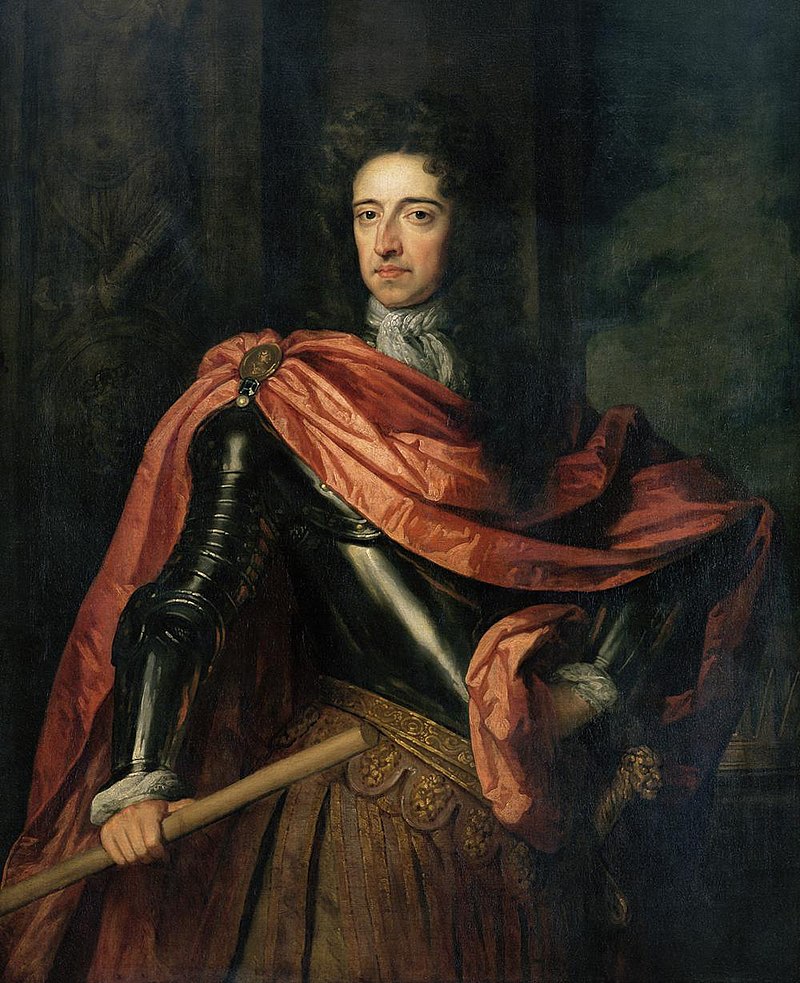
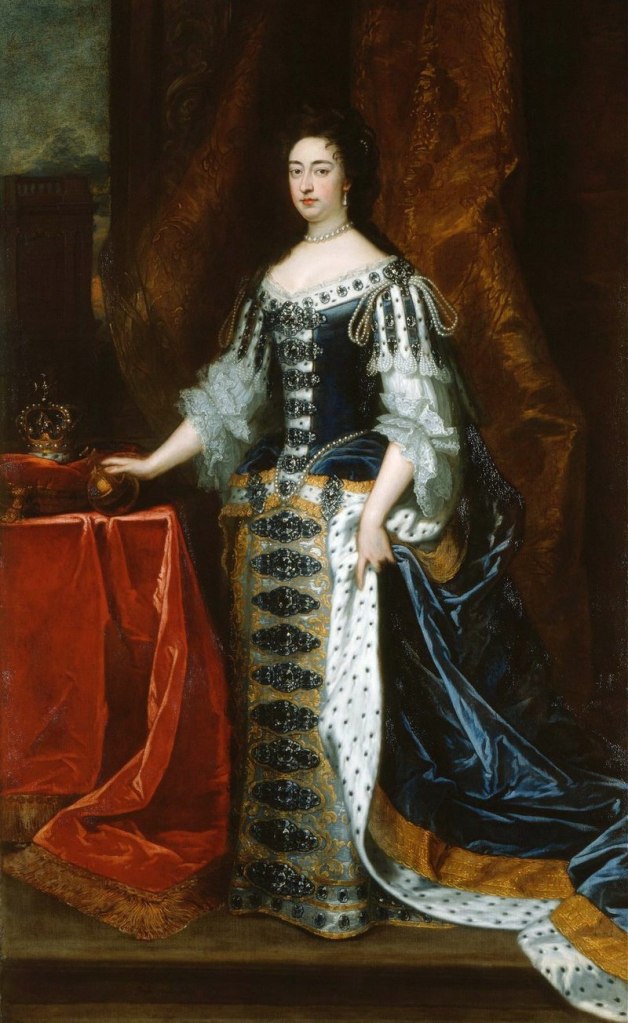
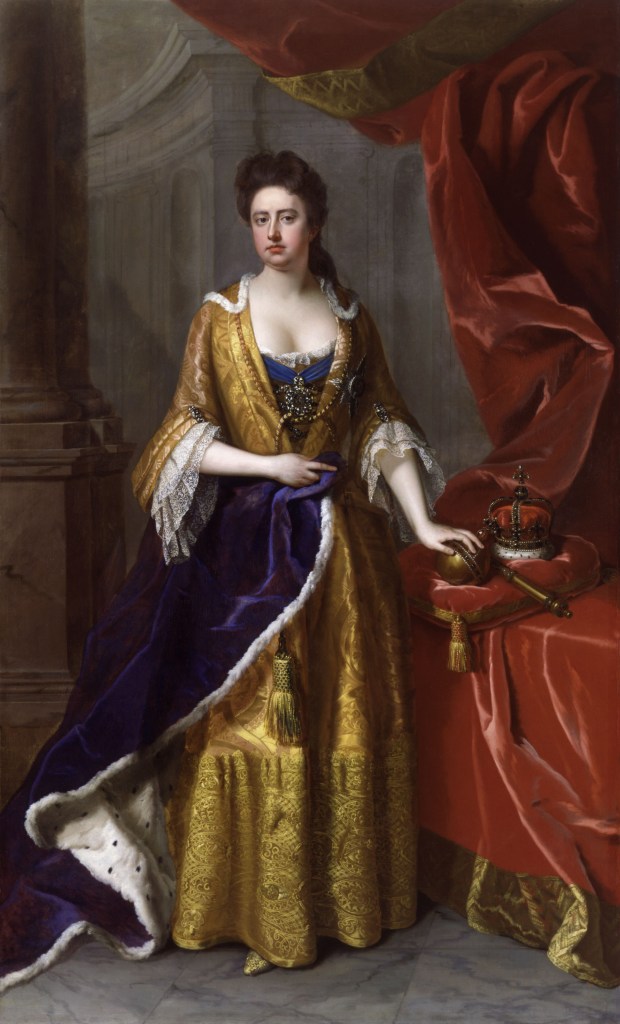
And so we come back to the opening of this story, with Tory Chancellor Robert Harley stepping into his new office to find the note that Lord Halifax had left him. And so we see the power of the ruler lies with their influence. The monarchs no longer had unquestionable authority, but through their influence they were still able to shape the political landscape of the realm; but it didn’t stop there. In 1714, Anne died, also without an heir, and the crown passed to her second cousin George I, the Elector of Hanover, who immediately replaced all the Tory ministers with Whigs as thanks for his crown. Consequently, all of the Tories who were instrumental to actually setting up the South Sea Company were now out of power and unable to control what would come next.
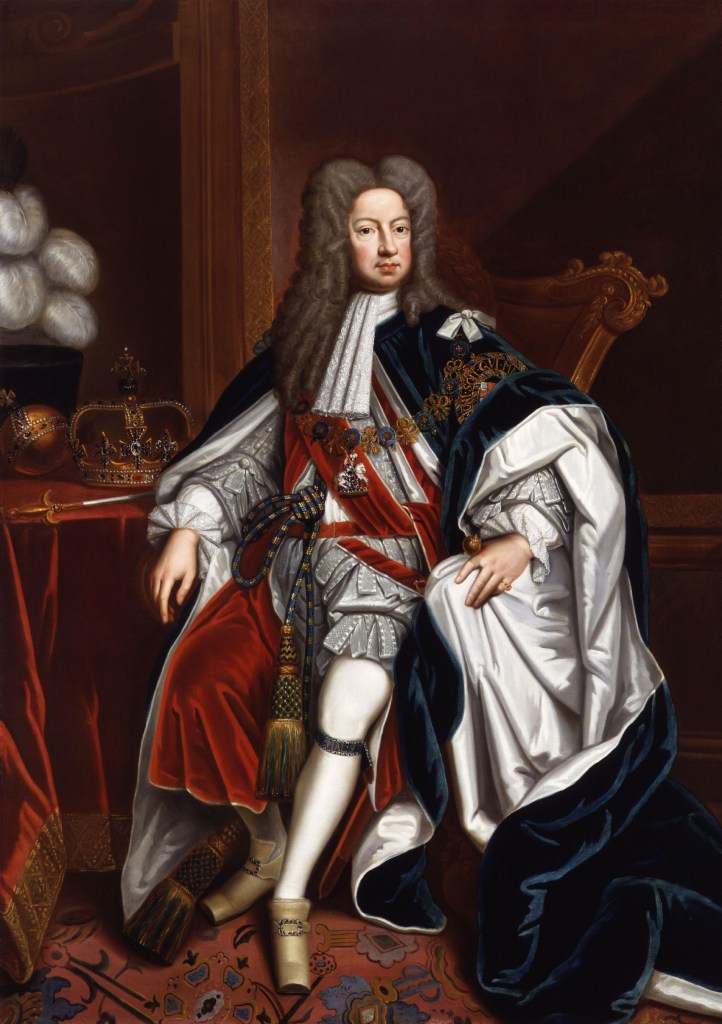
Incidentally, John Blunt apparently had no moral qualms about ditching his former ally Harley in favour of the new Whig administration. To a man like Blunt, politicians were little more than chess pieces to be set up and moved, and he couldn’t care less what their affiliations were.
The South Sea Company was pretty quiet for the next 6 years with a series of failed attempts to establish trade in the south sea preventing it from actually making any profit, but by 1719 the question of the national debt had come to the fore of British politics and was all over the press. Blunt finally put before parliament what the benefits of offloading debt to the company would be. If parliament would turn over £30,000,000 in its debts then; first, the government would have a 1% reduction in the interest rate (from 5% to 4%), a saving of about £300,000 per year. Second, the company would pay a large capital sum to pay for the privilege of taking on this debt, which would save a further £150,000 per year. It was estimated that through this scheme the government could wipe out the national debt in just 25 years. The Band of England fought back hard, but ultimately it came down to who could pay the government more. The Bank offered £5,600,000 for the conversion privilege, but the South Sea Company offered £7,500,000. With a difference of almost £2million, the day was clearly won by the South Sea Company.
The success of both the South Sea Company and the Bank of England was not left unnoticed by the rest of the continent, and soon the influence of these ideas bred imitation. One person worth looking at briefly is the once celebrated economic theorist, John Law. Law had a reputation for proposing radical economic theories and had friends among the Whigs. He could have been very successful in Britain, but was exiled for killing another man in a duel (it was the 18th Century after all). After touring Europe for a while he settled at the Royal French Court and found his way up to running the country’s finances. Here he launched his own financial institution, the General Private Bank, where he revolutionised Western Europe by being the first financial institution to develop paper money. This soon became the National Bank of France, and he capitalised on the momentum he was building to put his theories into practice. He bought a company called the Mississippi Company (which owned significant lands in Louisiana), exaggerated the wealth of natural resources there and sold shares for the company as a sustainable joint-stock institution. The problem was that demand for shares was so high, Law simply printed more paper notes to make money for people to actually buy these shares. Law’s theories about money were correct, he saw the actual medium it was printed on as irrelevant, all that mattered was that people trusted the valuation of the particular medium. The problem was that while he was correct in believing that paper money would eventually replace metal, he was acting too fast in an economy that didn’t yet properly understand the ramifications of rapidly generating credit. Eventually the French government had to admit that there were more paper notes than metal coinage in circulation, and suddenly all the investors were trying to cash out. Law had promised that payouts from the shares and dividends would receive their money in paper rather than coins. The volume of money in circulation effectively doubled and inflation skyrocketed, causing major civil unrest and the crown was in an untenable financial situation for the rest of the century.
With the decision made to offload government debt to the South Sea Company, Britain saw a massive influx of new joint-stock ventures all across the market. Change Alley from 1719 to late 1720 was in a state of constant booming hysteria and demand for these new stocks was constantly growing. Believing that the good times were here to stay forever (spoiler alert, they weren’t), thousands of people tried to set up their own ventures for people to invest in. Most of these companies had no charter, and were effectively riding high on the wave of demand that seemed to turn enough heads for them to openly flaunt the law. This irked Blunt endlessly because he believed people were spending money on these companies that they should have been spending on the South Sea Company. Blunt had been blatantly bribing British politicians by giving them large sums of stocks that were held onto and then sold at a later date. These transactions were all secretly recorded in a book that next to no one knew about, but served as the perfect means of blackmail to secure his will at the highest levels of parliament. This gave him all the friends he needed and all the leverage required to get parliament to set up committees specifically tasked with shutting these pseudo-legal joint-stock companies down.
But influence can be a double edged sword. By forcing his hand into the market so suddenly and without thought for repercussions, Blunt had set the stage for his own downfall as the ripple effect of speculative investments rocked the whole nation. Back home in Britain, as 1720 was progressing through the summer, Blunt was becoming increasingly aware of the fragility of the house of cards he was ruling over. He needed everyone in the country to be buying nothing but his stock, so he decided to go after the larger joint-stock companies and try to take them down. 2 were completely beyond his reach as the current king had given them a charter earlier that year (for £600,000), but another 4: Royal Lustering, Yorks Buildings, the English Copper Company, and the Welsh Copper Company (particularly galling as the Prince of Wales was the Governor of the Welsh Copper Company) still dominated the legal stock trading market. The prince was given a chance to sell off his shares for a tidy £40,000 profit before Blunt made his move. He approached Lord Townsend, an influential Whig peer and the brother-in-law of Robert Walpole, and had him agree to a writ against these companies on the pseudo-legal grounds that their charters had been procured too early and was therefore not properly valid in the contemporary market. It was successful, and their stock prices crashed overnight. Blunt was initially overjoyed to see his rivals crash and burn, and no doubt revelled in his new ability to exert power over other institutions, but he hadn’t foreseen that this would have serious knock on consequences for the rest of the market as everyone started to realise how easily and quickly these companies could crash. On August 17th the South Sea Stock was trading for £900 per share, and on September 28th it was selling for £190.
 The Money Trail