The South Sea Trading Company is remembered to history as one of the greatest swindles ever concocted, but only to those who have studied what is otherwise a rather niche century in British history. This is a real shame, as the 1600s had brought with it many new ideas on what money and wealth could truly be, and with it gave rise to the modern financial institutions that we would recognise today; chief among them the Bank of England. This was an age before any kind of regulation of markets existed, and so consequently those behind the curtains of this erstwhile trading company were able to run riot with insider trading, copious bribes to members of parliament to look the other way, and of course manipulating the market to the point of maintaining an overall valuation greater than all other joint-stock companies combined, with essentially nothing to back it up. The schemes that were cooked up by a few morally flexible trading company directors would spill over into parliament to create a national epidemic of corruption that led up to one of the greatest early financial crashes in Britain. This is a tale of great expectations and the wild frenzy that financial speculation can reach when the flames of public excitement are stoked, but this is also the story of how Britain’s fledgling experiments in Constitutional Monarchy became solidified and gave us Britain’s first and longest ever serving Prime Minister. Today, it is rare to hear anyone wonder about the origins of these institutions despite how utterly fundamental they are as a bedrock of modern society. Perhaps if the story was better known, then the context of how and why our modern system of government works would be better understood.
From a Messy Divorce to Founding Modern Britain
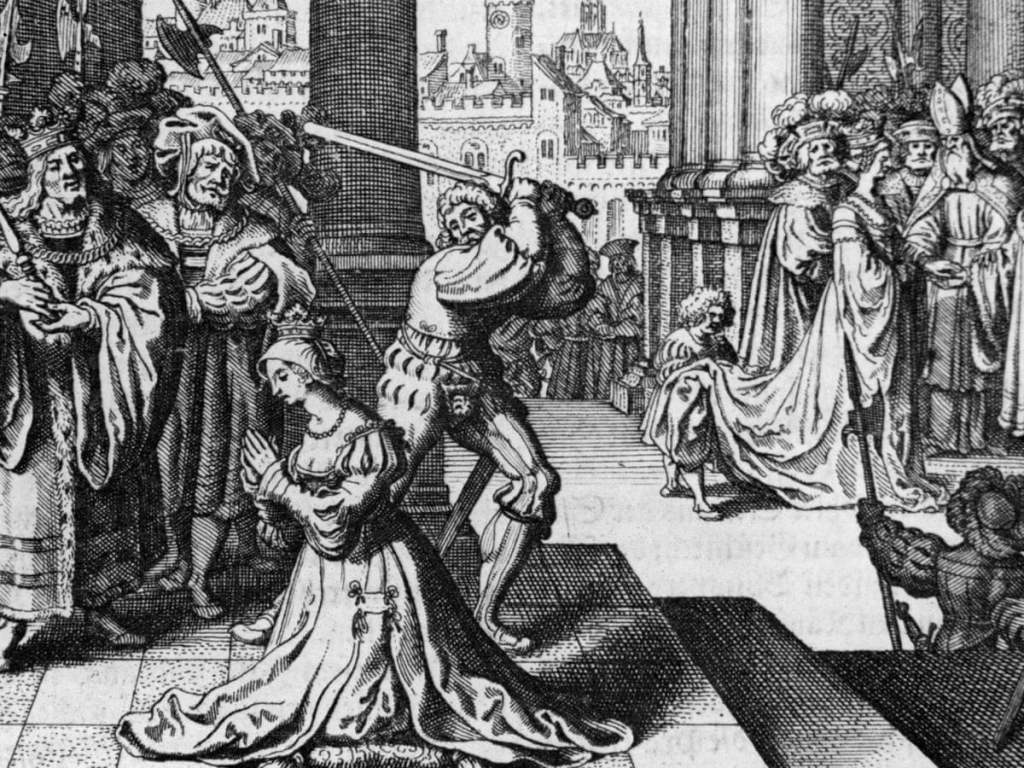
Stop me if you’ve heard this one: “Divorced, beheaded, died, divorced, beheaded, survived”. A classic rhyme known to just about anyone educated in the United Kingdom due to the infamy of the monarch with which it is associated: Henry VIII. The Tudor dynasty is perhaps the most universally known royal family to many people raised in Britain, and while they may not necessarily remember any details from this period I would wager you could ask just about anyone to name a few things they know about the Tudors off the top of their head and they would recall; Henry VIII’s split from the Catholic Church to divorce his first wife and create the new Church of England, and England’s previous longest reigning monarch, Elizabeth I (This is, of course, assuming that the wife killings are discounted from Henry’s list of accolades). Both of these things would go on to directly influence the formation of the modern British government.
While these major turning points in history are generally known, typically the tumultuous period following the Tudors is left to later years in study and is therefore not generally known due to it either being optional or frankly not very interesting to teenagers in a classroom. This is a shame, since unlike many other countries such as France or the United States of America whose political foundations are studied at great length as a source of pride, many people in the United Kingdom are unaware of just how wildly powerful early Modern English politics was, and just how deep the wounds of the Christian schism under the Tudors would seep into the very foundations of democracy in this country.
It’s in the early 18th Century that we pick up this particular tale of financial scheming. Parliament was a fiercely partisan institution. The origins of this partisan split bring us back to Henry VIII and his infamous split from the Catholic Church. By proclaiming the Monarch to be the supreme spiritual and secular authority in England, the precedent was set for self determination when it came to religious practices and freedoms. England’s split from the Catholic Church was not an easy or bloodless one. Under Henry VIII, the Catholic Church was stripped of many of its properties and left with a fraction of the wealth they had accumulated for centuries unmolested. Queen Elizabeth I, the protestant daughter of Henry VIII, famously died without an heir, leaving King James VII of Scotland, a Catholic, to be named the new king of England. This left the majority Protestant population of England under the subjugation of a Catholic king, despite having struggled through religious and political unrest in order to practice as Anglicans.
This led to an inevitable disparity between the Anglican Church and the Royalists who at the very least tolerated a Catholic monarch. For much of the 17th Century, England was plunged into a series of civil wars, political revolutions, and bloody civil strife with the question of religious freedoms always at the heart of political debates. After all, there was no greater debate than that which governed the very soul of England.
Unlike France or the United States, the separation of Church and State in Britain happened centuries after its civil war and foundation of parliament. Without this separation, political discourse was free to run wild with religious matters, and Members of Parliament found the question of religious freedom in England to be at the heart of their political identity; culminating in the origins of partisanship in English politics. This tinderbox of conflicting political and religious sensibilities came to a head with the revelation that the heir presumptive, James II, of the current Monarch, Charles II, was openly a Catholic. When James II’s wife gave birth to a son, James Stuart, the path for a return to Catholic monarchy became a very real possibility, splitting parliament and creating the first two modern political parties in England.
On one side were the Tories (a distant and decentralised ancestor to our modern Conservative Party), who represented a more conservative political philosophy. The Tories were typically landed gentry who drew their wealth from estates and the resources that could be physically used; i.e. crops, minerals, and of course people. While not necessarily pro-Catholic, they tended to favour policies of tolerance towards the Catholic population of England. It was this, and their respect for the power and authority of the monarchy that brought them so fiercely into conflict with their arch rivals; the Whigs. Many people today view the current Monarch as a safeguard, a final backstop between Parliament and absolute power, and this view was very much rooted in this age. The Tories viewed the Monarch as a counterweight to the titanic political ambition of the Whigs, and they were arguably not without cause to do so.
Having been the instigators of what would later be called the Glorious Revolution (in which Whig Members of Parliament invited the Protestant Prince William and Princess Anne of Orange to replace the Catholic King James II), the Whigs had more than proven themselves capable of overturning the entirety of central government in England. The Whig Party stood fiercely opposed to any toleration of Catholic practices in England. For the Whigs, Catholicism brought with it that very idea that Henry VIII went to such pains to establish, that the head of a nation acted as the supreme spiritual and secular authority for its people. By having a Catholic monarch, that self determination was removed, as spiritual authority was ceded back to the Pope. Drawn from the very elite of English society, their party stood for economic liberalism to the extreme, but also fostered radical new ideas that would set the bar for political ambition. At the end of the 1600s one such radical idea would explode into British politics with the Whig controlled institution: the Bank of England.
 The Money Trail
Oddly enough, the South Sea Bubble appeared in my high school history textbook. It was one of many, many (manymanymany) events that was important enough to mention but not important enough to say anything about. It’s a wonder that I learned to love history, because an introduction like that is calculated to send students running the other way. Almost than 60 years later, I finally did some reading about it. It’s a shame I waited so long. It’s fascinating.
LikeLiked by 1 person
Oops–make that “were important enough..”
LikeLike
Great to hear that at least some schools seemed to cover it! My senior history education consisted of the wholly original topics of: the first world war, the second world war, and an extremely biased course on Ireland in the 19th century. Stories like these lead to deeper curiosity in people, and I’m delighted to hear that you find the topic so interesting!
LikeLike